 Mar 28, 2025 - 0
Minutes read
Mar 28, 2025 - 0
Minutes read
Mastering On‑Page SEO with SurferSEO: A Comprehensive Review
What Is SurferSEO?
SurferSEO is an SEO optimization tool designed to help content creators, marketers, and SEO professionals make data-driven decisions for improving organic search performance. At its core, SurferSEO analyzes and compares your content against top-performing pages in the search engine results for a given keyword. The platform provides actionable insights to help you optimize on-page elements—such as keyword usage, content structure, headings, and paragraph length—based on what’s currently ranking.
Some of our links may be affiliate links and if you buy through our link, we might generate some commissions.

Unlike traditional SEO tools that rely primarily on backlink data or keyword volume, SurferSEO focuses on content relevance and structure. Its core functionality revolves around its Content Editor, which delivers real-time optimization recommendations as you write or edit content. This includes target keyword density, the number of images, recommended word count, and more—mapped directly from successful competitor pages.
By integrating these insights into your workflow, SurferSEO acts as a strategic guide to align your content with what search engines already favor, helping increase visibility and ranking potential without relying on guesswork.
Why On‑Page SEO Still Reigns Supreme
In today’s evolving SEO landscape, on-page optimization remains a critical driver of search visibility and performance. While off-page factors like backlinks and domain authority are important, they can’t compensate for weak or poorly structured on-page content.

Search engines prioritize pages that deliver clear, relevant, and well-organized information. On-page SEO ensures your content aligns with these expectations by focusing on elements you can directly control, such as keyword usage, headings, metadata, and internal links.
Here’s why on-page SEO continues to be foundational:
Control over content quality: You have full ownership of your on-page elements, allowing you to refine content structure, language, and clarity for both users and search engines.
Alignment with user intent: Optimized pages are better equipped to satisfy specific search queries, increasing engagement and reducing bounce rates.
Support for semantic search: Modern search engines analyze context, not just keywords. On-page SEO helps structure your content to reflect topical relevance and depth.
Improved crawlability: Clean, organized pages with clear navigation make it easier for search engines to index your site accurately.
Enhanced user experience: Readable formatting, mobile-friendly design, and fast load times—all part of on-page optimization—contribute to better rankings and user satisfaction.
Ultimately, effective on-page SEO builds the foundation that supports all other SEO efforts. Without it, even strong off-page strategies can fall short.
Data-Driven Optimization: SurferSEO’s Core Advantage
SurferSEO’s standout feature lies in its ability to turn raw search data into practical, content-shaping insights. Rather than relying on intuition or outdated SEO rules, it provides a structured, data-driven approach to optimization—helping users create content that aligns with what search engines are actively ranking.
At the heart of this capability is SurferSEO’s real-time analysis of top-performing pages for a given keyword. The platform breaks down hundreds of ranking factors—such as word count, keyword frequency, internal and external links, use of headings, and image count—to build a benchmark of what successful content looks like. This data is then distilled into specific, actionable guidelines within the Content Editor.
Key ways SurferSEO uses data to inform decisions:
SERP-based benchmarking: Surfer compares your content against competitors on page one, providing a live SEO score and suggestions tailored to the keyword’s current landscape.
Content structure insights: It recommends optimal paragraph length, heading distribution, and section depth based on real-world examples.
Keyword and term recommendations: Surfer identifies relevant terms and phrases that frequently appear in top-ranking content, helping boost topical coverage without keyword stuffing.
Audit capabilities: For existing pages, Surfer offers audits that highlight missed opportunities and structural gaps, based on live SERP data.
By translating complex SERP data into clear content strategies, SurferSEO empowers users to optimize with precision—grounding creative decisions in measurable, competitive insights.

Content Editor in Action: Scoring, Structure, and Strategy
SurferSEO’s Content Editor is the centerpiece of its on-page optimization toolkit—designed to guide writers and SEO professionals through the process of creating high-performing content in real time. By combining competitive analysis with content evaluation, the editor helps ensure your pages meet the structural and topical benchmarks set by top-ranking results.
Real-Time Content Scoring
At the core of the Content Editor is a dynamic content score that updates as you write. This score reflects how well your draft aligns with data-driven recommendations pulled from top-performing pages. It evaluates several on-page factors, including keyword usage, heading structure, paragraph length, and semantic relevance. A higher score generally indicates that your content is better optimized to compete in search results.
Structuring with Confidence
The editor doesn’t just flag keyword counts—it provides a full breakdown of how your content should be structured:
Word count: Based on averages from top-ranking pages.
Headings (H1–H6): Suggested distribution for logical flow and hierarchy.
Images: Ideal number of images to enhance readability and engagement.
Paragraph and sentence length: Guidance on improving clarity and reducing reader fatigue.
This structural feedback ensures your content isn't just keyword-optimized—it’s also readable and user-friendly.
Strategic Keyword Integration
SurferSEO’s Content Editor also offers a list of related terms and phrases that appear frequently in the top 10 results. These recommendations go beyond basic keyword stuffing, encouraging more natural, context-rich language that satisfies modern semantic search algorithms. Each keyword includes a suggested usage range, helping you balance coverage without over-optimization.
Together, these features turn the Content Editor into more than just a writing aid—it’s a strategic tool that brings clarity to the optimization process, helping you create content that’s structured for both search engines and users from the start.

Keyword and SERP Analysis: Going Beyond Basics
SurferSEO extends its capabilities well beyond content optimization with robust keyword research and SERP analysis tools that provide a deeper understanding of the competitive landscape. These features are designed to help users not just find relevant keywords, but also evaluate their real-world potential and context within the search engine results pages (SERPs).
Advanced Keyword Research
SurferSEO’s keyword tool doesn’t just list terms with high search volume—it prioritizes relevance and intent. Users can explore keyword clusters, which group related terms based on topical proximity, making it easier to build comprehensive, semantically rich content. This clustering approach supports topic authority and improves the chances of ranking for multiple search terms within a single piece of content.
Key benefits include:
Search volume and difficulty metrics: Evaluate keywords not just on how often they're searched, but how competitive they are.
Topical relevance: Discover supporting terms that enhance context and help target long-tail opportunities.
Content planning integration: Keywords can be directly mapped into outlines and content briefs, streamlining workflow.
SERP Analyzer for Competitive Context
The SERP Analyzer gives users a detailed view of what’s currently ranking for a target keyword. It compares hundreds of on-page factors—such as backlink profiles, domain authority, word count, and keyword usage—across the top results, offering a side-by-side breakdown of competitors.
Use cases include:
Gap analysis: Identify what top-ranking pages include that your content might be missing.
Trend identification: Spot commonalities in page structure, content depth, or media usage across top results.
Strategy refinement: Adjust your content approach based on real-time SERP data rather than assumptions.
By combining granular keyword insights with real-time SERP comparisons, SurferSEO gives users a comprehensive toolkit for making smarter, more strategic SEO decisions—grounded in the reality of what’s working right now in search.
Audit Tool Breakdown: Fixing What Holds You Back
SurferSEO’s Audit Tool is built to help improve existing content by uncovering the on-page factors that may be limiting its performance in search results. Whether you're dealing with stagnant rankings or underperforming blog posts, the Audit Tool offers a focused, data-backed approach to identifying and fixing what’s holding your content back.
Immediate, Actionable Insights
The Audit Tool scans your published page and compares it to the top-ranking competitors for your target keyword. It then highlights key areas where your content falls short, presenting suggestions across multiple dimensions of on-page SEO.
Some of the core areas the audit evaluates include:
Keyword usage: Identifies missing or underused primary and secondary terms based on SERP data.
Word count: Compares your content length against that of ranking pages, helping you gauge whether your content is too thin or overly long.
Meta data optimization: Flags missing or suboptimal titles, descriptions, and alt text that may be impacting click-through rates or accessibility.
Backlink presence: While primarily an on-page tool, the audit also notes how your backlink profile compares to others, providing broader context for optimization.
Technical elements: Checks for internal linking issues, heading structure inconsistencies, and page speed considerations.
Prioritized Recommendations
What sets the Audit Tool apart is its focus on prioritization. Rather than overwhelming users with a long list of SEO tasks, it groups suggestions by impact and feasibility—making it easier to decide what to tackle first. You can work through each section systematically, ensuring improvements are both efficient and effective.
By using the Audit Tool, you gain clarity on why a page isn’t ranking as expected and receive targeted guidance on how to close those gaps. It transforms guesswork into a step-by-step strategy, helping you refresh and refine content so it aligns more closely with what search engines—and users—are looking for.
Content Score: Decoding the Metrics That Matter
SurferSEO’s Content Score is a real-time metric designed to quantify how well your content aligns with SEO best practices and top-performing pages for a given keyword. While it may seem like just another number, the Content Score offers valuable insight into your content’s potential to compete in search results—if you understand what it’s measuring and how to use it effectively.
What the Content Score Measures
The score, typically ranging from 0 to 100, evaluates your draft against live data from the current top-ranking pages. It takes into account several on-page factors, including:
Keyword usage: How well you’re incorporating primary and secondary terms, both in quantity and placement.
Content structure: The use and balance of headings, paragraphs, and other formatting elements.
Topical relevance: Coverage of related terms and concepts that signal depth and authority.
Readability and layout: Sentence and paragraph length, use of images, and overall user-friendly formatting.
Each component is benchmarked against competitors, so the score reflects how your content stacks up in the real SEO landscape—not just in theory.
Interpreting the Score
A high Content Score (typically 70 or above) suggests your content meets most of the structural and topical criteria seen in top-performing pages. However, it’s important to understand that the score alone doesn’t guarantee rankings. Instead, it acts as a directional tool—guiding you toward better optimization decisions.
60–70: Good baseline optimization, but may need improvements in keyword distribution or structural depth.
70–85: Strong SEO alignment; content is likely competitive with current SERP leaders.
85+: Excellent structure and keyword integration, though other factors (like backlinks or domain authority) still play a role.
Using the Score Strategically
Rather than chasing a perfect score, the real value lies in using it to balance relevance, readability, and structure. Over-optimizing just to push the number higher can lead to unnatural content. Instead, focus on making thoughtful improvements that serve both users and search engines.
The Content Score is not just a grading system—it’s a feedback loop that helps refine your content in context. Used effectively, it can boost not only your SEO readiness but also the overall quality of your content.
Pros, Cons, and Practical Use Cases
Like any SEO tool, SurferSEO has strengths and limitations. Understanding both sides helps users make informed decisions about when and how to incorporate it into their content strategy.
Pros: Where SurferSEO Excels
Data-Driven Optimization: SurferSEO provides concrete, SERP-based benchmarks, making content decisions more objective and less speculative.
Real-Time Guidance: The Content Editor offers live feedback, helping users adjust structure, keyword usage, and readability as they write.
Actionable Audits: The Audit Tool delivers specific, prioritized fixes for underperforming content—ideal for refreshing old pages.
Keyword Clustering: Supports topic depth and semantic SEO by grouping related keywords for more comprehensive coverage.
User-Friendly Interface: The platform is intuitive, even for non-technical users, with clean dashboards and clear scoring systems.
Cons: Where SurferSEO May Fall Short
Overemphasis on Quantitative Metrics: Relying too heavily on matching keyword frequencies or content lengths can sometimes lead to formulaic writing.
Limited Off-Page Insights: While SurferSEO touches on backlinks, it lacks the depth of dedicated link analysis tools like Ahrefs or Semrush.
Language and Niche Gaps: Its recommendations are strongest in well-covered markets; results may be less consistent in niche topics or non-English content.
Risk of Over-Optimization: Chasing a perfect Content Score can tempt users to overload content with keywords, reducing natural flow and reader engagement.
Practical Use Cases
Content Creation: Ideal for writers and SEO teams developing new articles, landing pages, or product copy optimized for specific keywords.
Content Refresh: Useful for updating existing pages that are stagnating in search rankings, especially with the Audit Tool’s targeted suggestions.
Content Planning: Helps SEO strategists cluster keywords and build structured outlines for long-form content or topic hubs.
Agency Deliverables: Agencies can leverage SurferSEO for scalable, data-backed content recommendations across multiple clients and industries.
In short, SurferSEO is a powerful ally for content and SEO professionals—particularly when used as part of a broader strategy that balances data with editorial judgment.
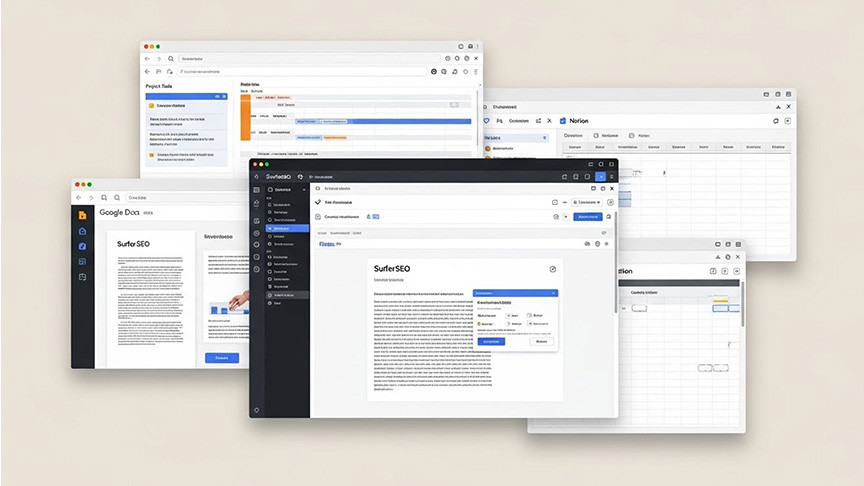
How SurferSEO Fits Into a Modern SEO Workflow
In a landscape where SEO success depends on relevance, structure, and adaptability, SurferSEO offers a practical, data-informed layer to a modern content strategy. Rather than functioning as a standalone solution, it integrates best when used alongside other tools and tactics across the content lifecycle.
1. Content Planning and Keyword Strategy
SurferSEO’s keyword research and clustering features are well-suited for the early stages of content development. Marketers and strategists can use these tools to:
Identify primary and secondary keywords with high potential.
Group terms into thematic clusters for pillar and cluster page models.
Align topics with user intent and current SERP trends.
By building a keyword map within Surfer, teams set a strong foundation for topic authority and internal linking strategy.
2. Content Creation and Optimization
The Content Editor becomes central during the writing process. Writers can:
Create outlines based on competitor structure and recommended headings.
Optimize drafts in real time using data-driven suggestions for keywords, content length, and formatting.
Balance SEO requirements with editorial tone by selectively applying Surfer’s recommendations.
This integration ensures that content is SEO-ready from the start, reducing the need for extensive revisions later.
3. Post-Publication Refinement
After content is live, SurferSEO’s Audit Tool helps monitor and maintain performance. SEO teams can:
Identify gaps or outdated optimization in underperforming pages.
Apply targeted updates based on changes in SERP behavior or competition.
Track how optimizations correlate with improvements in rankings or engagement.
This audit process allows for iterative improvement, supporting long-term content health.
4. Cross-Tool Collaboration
SurferSEO complements other platforms:
With Google Search Console or Analytics: Validate content performance post-optimization.
With tools like Semrush or Ahrefs: Pair on-page insights with off-page metrics like backlinks and domain authority.
With CMS platforms: Use Surfer’s integrations or browser extensions to streamline publishing and optimization directly within your workflow.
By incorporating SurferSEO into each stage of content planning, creation, and refinement, teams can ensure their SEO strategy remains data-informed, responsive to search trends, and scalable across campaigns.

Final Verdict: Is SurferSEO Worth It for On-Page SEO?
For content creators, marketers, and SEO teams focused on improving on-page performance, SurferSEO offers a clear return on investment. Its data-driven approach simplifies the complexities of modern SEO by providing actionable insights tailored to real-time SERP trends—helping teams create content that’s both relevant and competitive.
Who SurferSEO Is Best For
In-house SEO teams looking to scale content efforts with consistent quality.
Freelance writers and content strategists who need guidance on structure and keyword usage.
Agencies managing SEO deliverables across multiple clients and industries.
Small businesses and startups aiming to compete organically without a large SEO budget.
SurferSEO is particularly valuable for those who want to move beyond basic keyword placement and gain clarity on how their content compares to top-ranking pages.
ROI and Strategic Value
The platform's core strength—turning competitive analysis into real-time optimization recommendations—can help reduce guesswork, speed up content production, and improve organic visibility. While it’s not a one-stop solution for all SEO needs, it significantly enhances the on-page side of the equation.
Used thoughtfully, SurferSEO supports a more structured, informed, and scalable content strategy. For those prioritizing on-page SEO as a growth channel, it’s not just worth it—it’s a smart investment in sustainable search performance.