 Jul 28, 2025 - 0
Minutes read
Jul 28, 2025 - 0
Minutes read
TP‑Link WiFi Extender for Home Coverage: Simple Setup and Powerful Performance
Introduction: Why a Wi‑Fi Extender Matters for Home Coverage
In today’s connected homes, a strong and reliable Wi‑Fi signal is no longer a luxury — it’s a necessity. From video calls and streaming to smart lighting and security cameras, the number of devices competing for wireless bandwidth continues to grow. Yet many homes still struggle with dead zones, slow speeds, or intermittent connections in certain rooms. These common Wi‑Fi frustrations are usually caused by distance from the router, building materials that block signals, or interference from other electronics.
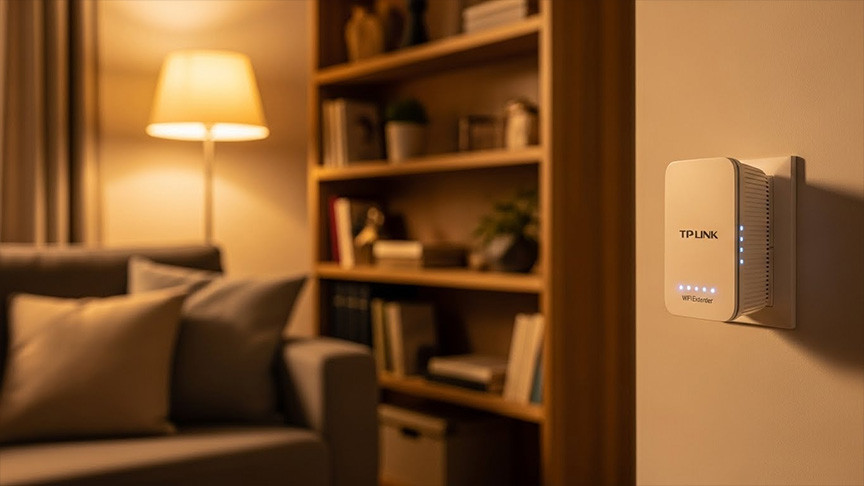
This is where a TP‑Link Wi‑Fi Extender can make a real difference. A Wi‑Fi extender works by capturing your existing wireless signal and rebroadcasting it to areas that the main router can’t reach effectively. Instead of relying solely on your router’s range, an extender fills in weak spots — helping ensure consistent connectivity in bedrooms, basements, garages, home offices, and outdoor spaces.
Some of our links may be affiliate links and if you buy through our link, we might generate some commissions.
Whether you’re tired of buffering during movie night or need uninterrupted video conferencing in a remote corner of your home, a Wi‑Fi extender enhances coverage without the complexity of installing additional networking hardware. It’s an affordable, easy‑to‑set‑up solution that brings better performance and peace of mind to your everyday online experience.
Meet the TP‑Link Wi‑Fi Extender: Compact Yet Powerful
Designed with both performance and simplicity in mind, the TP‑Link Wi‑Fi Extender offers a practical solution to unreliable wireless coverage. Despite its compact size, this device delivers powerful performance — extending your network’s reach to cover hard-to-access areas without compromising speed or stability.
Engineered for seamless integration into any home environment, the extender plugs directly into a wall outlet and quickly pairs with your existing router. TP‑Link’s trusted technology ensures consistent signal strength, making it ideal for streaming, online gaming, and smart home devices. With support for dual-band connectivity and intelligent signal indicators, it helps users find the optimal placement for maximum effectiveness.
Whether you're expanding coverage to a second floor or eliminating dead zones in thick-walled rooms, the TP‑Link Wi‑Fi Extender stands out for its reliability, ease of use, and strong performance in a minimal footprint.
Effortless Setup in Minutes: A Step‑by‑Step Walkthrough
Setting up the TP‑Link Wi‑Fi Extender is refreshingly straightforward, even for users with no technical background. With no need for additional cables or complex configuration, most users can get it up and running in just a few minutes. Here's how:
Step 1: Plug In the Extender
Start by plugging the TP‑Link extender into a power outlet near your router. Wait for the power light to stabilize.
Step 2: Connect Using WPS (One-Touch Method)
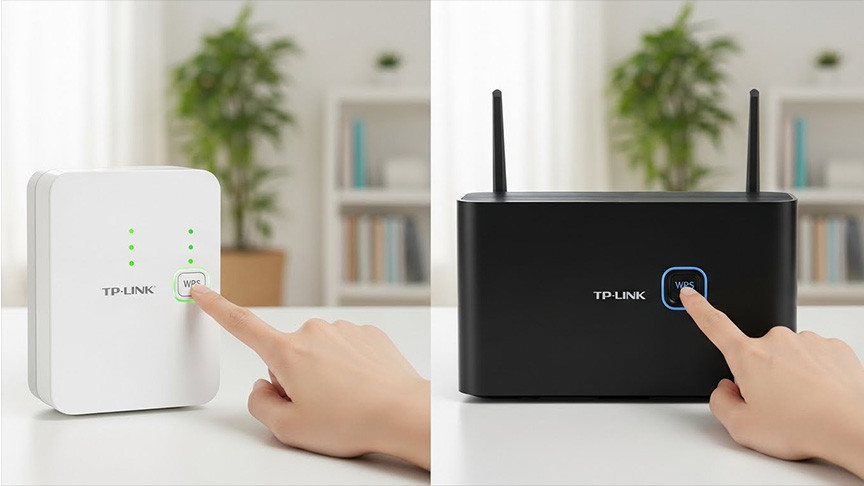
If your router supports WPS (Wi-Fi Protected Setup), press the WPS button on your router, then press the WPS button on the extender within two minutes. The devices will automatically pair, extending your existing network.
Step 3: Relocate for Optimal Coverage
Once connected, unplug the extender and move it to a location halfway between your router and the area with poor Wi‑Fi coverage. Use the extender’s signal strength indicator lights to find the ideal spot.
Step 4: Confirm Connection
Recheck connectivity by testing devices in the previously weak zones. If needed, adjust placement slightly for improved results.
For routers without WPS, TP‑Link also provides a quick setup via the Tether app or a web browser, guiding users through the connection process with clear prompts.
The entire setup takes just minutes, no advanced networking knowledge required — making it an ideal option for users looking for a quick, effective way to boost home Wi‑Fi.
Plug‑and‑Play Convenience for Every Room
One of the standout features of the TP‑Link Wi‑Fi Extender is its placement flexibility, allowing you to adapt your network coverage as your needs change. Thanks to its compact, wall-mounted design, the extender fits neatly into any standard outlet — no clutter, no additional cables, and no drilling required.
Whether you're working in a home office, streaming in the living room, or managing smart devices in the garage, the extender can be easily moved and repositioned to optimize coverage. Built-in signal strength indicators help you identify the best location for maximum effectiveness, ensuring a strong and stable connection exactly where you need it.
This plug‑and‑play approach makes it easy to expand your network without any technical hurdles. From upstairs bedrooms to outdoor patios, the TP‑Link extender delivers consistent Wi‑Fi performance across your entire home — all without the hassle of complex installation or reconfiguration.
Boosted Signal Strength Across Your Home
Once installed, the TP‑Link Wi‑Fi Extender delivers a noticeable upgrade in wireless performance — especially in areas that previously suffered from weak or unreliable signals. By capturing and rebroadcasting your existing Wi‑Fi, it effectively eliminates dead zones and strengthens connectivity in hard-to-reach spaces.

Users typically see improvements in:
Signal reach: Coverage extends to upper floors, basements, garages, and outdoor areas.
Streaming and downloads: Fewer buffering issues and faster download speeds, even with multiple devices connected.
Device stability: Consistent performance for smart TVs, laptops, gaming consoles, and IoT devices throughout the home.
Thanks to dual-band support, the extender balances bandwidth across high-demand activities, ensuring smoother performance whether you're video conferencing, gaming online, or running smart home automations.
By reinforcing your existing network, the TP‑Link Wi‑Fi Extender acts as a reliable bridge between your router and the rest of your home — helping ensure a more responsive, stable wireless experience in every room.
Real‑World Coverage: From Living Room to Backyard
In practical terms, the TP‑Link Wi‑Fi Extender transforms how and where you can stay connected throughout your home. Whether you're streaming shows in the living room or taking video calls on the back patio, the extender helps ensure that your signal reaches further — and stays stronger.
Here are a few common scenarios where users notice real improvement:
Living Room to Bedroom: If your router is placed in a central living area, bedrooms at the far end of the house often experience weak connections. With the extender placed midway, signal strength is restored, allowing for uninterrupted streaming or browsing.
Kitchen and Hallways: Kitchens often contain signal-blocking appliances and materials. Placing the extender nearby minimizes interference, keeping smart displays and assistants responsive.
Home Office or Study: For remote work or virtual learning, stable connectivity is essential. The extender ensures that your office devices maintain a steady connection, even when the router is on a different floor.
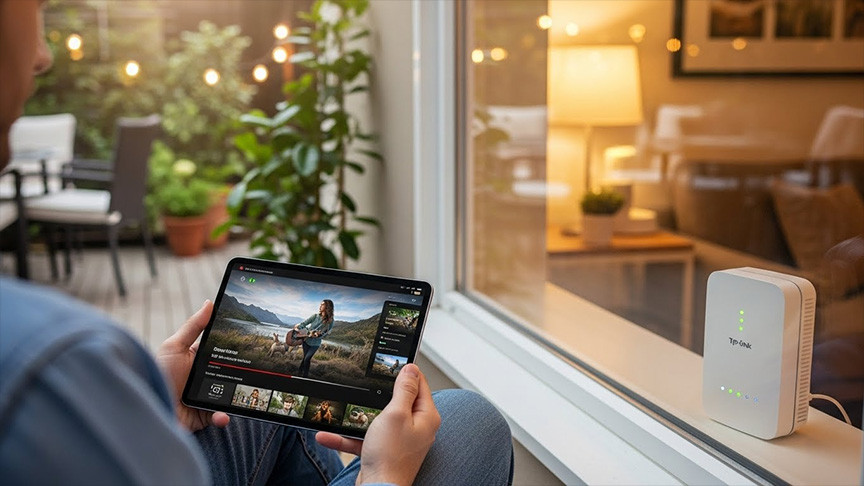
Garage and Backyard: Whether you’re managing smart security cameras in the garage or streaming music during a backyard gathering, the extender expands coverage beyond the main walls of your home — helping reduce dropouts in peripheral zones.
By filling in coverage gaps with consistent signal strength, the TP‑Link Wi‑Fi Extender delivers real-world performance improvements that directly enhance how you use your home network every day.
Performance Metrics: Speed Stability & Signal Quality
When evaluating a TP‑Link Wi‑Fi Extender — whether an AC750, AC1200, or more advanced model — the key performance improvements you’ll notice are in signal reach, stability, and usable speeds in previously weak zones. Here’s what typical testing and user trials indicate:
📊 Measurable Speed Improvements
Some users report that, once properly placed, a TP‑Link extender can deliver speeds close to the full capacity of the original network in nearby locations — for example, speeds of around 550 Mbps down and 530 Mbps up have been observed in real‑world testing scenarios when the extender is near the main router.
For more typical consumer models like the AC750 dual‑band extender, you can expect combined throughput rates up to around 733 Mbps (300 Mbps on 2.4 GHz + 433 Mbps on 5 GHz) under ideal conditions, covering up to roughly 1,200 sq ft and supporting ~30 devices.
📈 Signal Stability in Real Use
Reviews of TP‑Link extenders — including more advanced units like the Wi‑Fi 6‑capable RE715X — indicate significant reductions in dead zones and smoother connectivity across multi‑story homes compared with having only a router. Testers frequently note “solid speed improvement” as the extender bridges gaps where the original signal was weak or absent.
While extenders inherently rebroadcast the router’s signal — which can result in some reduction compared to direct router speed — the stability in expanded areas (like second floors or distant rooms) is usually a marked improvement over no extender at all.
📶 What This Means in Practice
Closer to the router: Speeds with the extender can be very close to what your router provides directly.
In distant zones: You’ll often see stronger signal quality and more stable speeds where the router alone struggled — enough to support streaming, conferencing, and typical smart‑home usage without constant dropouts.
Signal quality: Built‑in signal indicators on TP‑Link extenders help you find a placement that delivers the best backhaul link to your router, optimizing both speed and signal strength.
Note: Actual speeds can vary based on your router’s capabilities, home layout, interference, and how far the extender is placed from the main signal. But across a range of models and reviews, TP‑Link extenders consistently deliver measurable improvements in coverage and stability compared with having no extender in problematic areas.
Smart Features That Help Your Network Perform Better
The TP‑Link Wi‑Fi Extender is equipped with several smart features designed to improve both the performance and usability of your home network. These additions make setup and ongoing use more intuitive, helping users optimize placement and maintain a stable connection with minimal effort.
📍 LED Signal Indicators
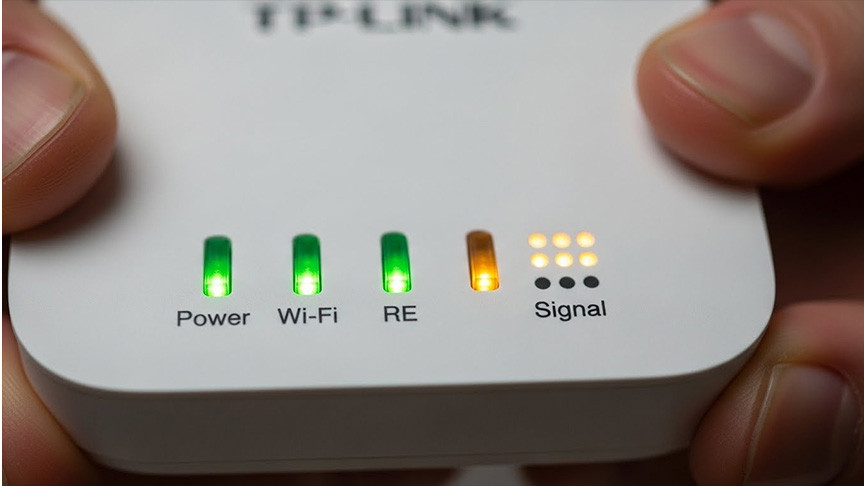
One of the most practical features is the built‑in LED signal strength indicator. These lights guide you to the best location for placing the extender — too close to the router and it won’t extend far enough; too far and it won’t pick up a strong signal. The indicator helps you find the sweet spot for optimal coverage and performance.
🔄 Dual‑Band Connectivity
Most TP‑Link extenders support dual-band Wi‑Fi, operating on both 2.4 GHz and 5 GHz bands. This allows them to handle a broader range of devices and network tasks. For instance, lighter activities like web browsing can use the 2.4 GHz band, while streaming or gaming traffic can stay on the faster, less congested 5 GHz band — balancing load and improving speed overall.
🔌 Universal Router Compatibility
TP‑Link designs its extenders to work with virtually any Wi‑Fi router or access point, regardless of brand. Whether you’re using a TP‑Link router or one from another manufacturer, the extender integrates easily, expanding your existing network without requiring specific hardware.
📱 App-Based Management
With the TP-Link Tether app, users can manage their extender from a smartphone. The app simplifies tasks like monitoring connected devices, updating firmware, and adjusting settings — all without needing to log into a web interface.
Together, these smart features ensure that the TP‑Link Wi‑Fi Extender is not only effective but also user-friendly, giving everyday users the tools to fine-tune their home networks without technical complexity.
Comparing TP‑Link Extender with Stock Router Range
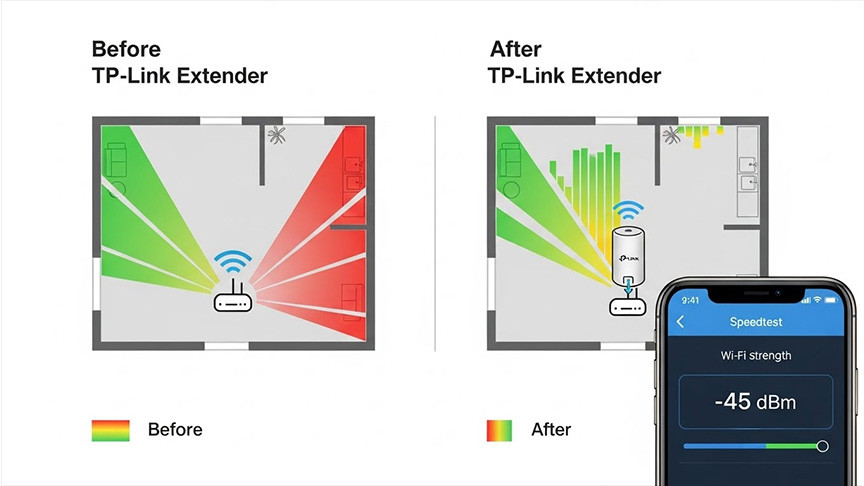
Most standard home routers — especially those provided by ISPs — have limited range, often struggling to deliver strong, stable Wi‑Fi beyond a central room or one floor. This is especially true in larger homes or those with thick walls and multiple stories, where signal degradation is common.
Here’s how a TP‑Link Wi‑Fi Extender compares to relying on a stock router alone:
📡 Before: Stock Router Limitations
Weak signals in far rooms: Bedrooms, basements, or upper floors often get minimal coverage.
Dead zones: Areas like garages, hallways, or backyards may have no connectivity at all.
Overloaded bandwidth: With multiple devices connected, speeds can drop, especially on a single-band router.
🚀 After: With TP‑Link Extender
Wider, consistent coverage: The extender fills in weak spots, extending signal to areas the router can’t reach on its own.
Reduced dead zones: Spaces that previously had no Wi‑Fi — like corners of the home or outdoor patios — now have usable signal.
More reliable connections: Devices stay connected as you move through the house, reducing dropouts during calls or streaming.
For example, a stock router might reliably cover only the main floor of a home. With a TP‑Link extender placed strategically (e.g., at a hallway midpoint), that same network can now reach upstairs bedrooms or outside workspaces — doubling the effective range in many cases.
This comparison highlights the extender’s value not just in improving speed, but in delivering usable Wi‑Fi where it previously didn’t exist, transforming your network’s real-world performance.
Tips to Maximize Your Wi‑Fi Coverage with TP‑Link
Getting the most out of your TP‑Link Wi‑Fi Extender goes beyond simple plug-and-play. With a few strategic steps, you can significantly improve your network’s coverage, stability, and overall performance. Here are some practical tips to help you optimize your setup:
1. Find the Optimal Placement
Midway Point: Position the extender about halfway between your router and the area with weak signal. Avoid placing it too far from the router, as it needs a strong base signal to rebroadcast effectively.
Avoid Obstacles: Keep the extender away from thick walls, metal appliances, or electronic devices that may cause interference (like microwaves or cordless phones).
2. Use the Signal Strength Indicator
Most TP‑Link extenders include LED indicators that show signal quality. A green or solid light typically means good placement, while red or blinking lights suggest you need to move the device closer to the router.
3. Choose the Right Band
Dual-band extenders offer both 2.4 GHz and 5 GHz channels. Use:
2.4 GHz for longer range (better for far corners of the house)
5 GHz for faster speeds (better for nearby rooms with high-bandwidth activities)
4. Avoid Channel Interference
If you experience interference from neighboring Wi‑Fi networks, try changing the router’s channel settings (via its admin panel or the Tether app). Use less crowded channels to reduce overlap and improve consistency.
5. Keep Firmware Updated
Use the TP-Link Tether app or web interface to check for firmware updates. These updates often include performance enhancements and security improvements.
6. Reboot Occasionally
Like any network device, periodic reboots (especially after power outages or ISP maintenance) can help maintain performance.
By applying these best practices, you’ll ensure that your TP‑Link Wi‑Fi Extender delivers the widest, most reliable coverage possible, giving every corner of your home a stronger connection.
Who Should Consider This Extender? Ideal Home Use Cases
The TP‑Link Wi‑Fi Extender is designed for anyone looking to eliminate Wi‑Fi dead zones and improve overall connectivity — but it’s especially well-suited for certain types of users and households. Here’s who will benefit most:
👨👩👧👦 Families with Multiple Devices
In busy households where smartphones, tablets, laptops, smart TVs, and connected home devices are all competing for bandwidth, signal strength can drop quickly. An extender helps ensure stable coverage in every room, so everyone can stream, scroll, and work without interruption.
🧑💼 Remote Workers and Students
For those working or studying from home, a reliable internet connection is essential. If your home office is far from your router or suffers from inconsistent signal, the extender delivers the stability needed for video calls, large file uploads, and cloud-based apps — without costly rewiring or mesh systems.
🎮 Gamers and Streamers
Online gaming and HD/4K streaming demand low latency and strong, uninterrupted connections. A TP‑Link extender helps reduce lag and buffering in areas where your router can’t reach, providing a smoother experience for both casual and competitive users.
🏡 Larger Homes or Multi-Story Layouts
In homes with multiple floors or thick walls, a single router often can’t provide full coverage. A TP‑Link extender bridges the gaps, improving signal strength in distant rooms, basements, attics, and outdoor spaces.
Whether you’re trying to keep your smart home devices online, create a reliable workspace, or simply enjoy uninterrupted entertainment, the TP‑Link Wi‑Fi Extender offers a cost-effective, easy-to-use solution for boosting your home network where it’s needed most.
Final Verdict: Simple Setup & Stronger Wi‑Fi for Every Corner
For households dealing with inconsistent Wi‑Fi or dead zones, the TP‑Link Wi‑Fi Extender offers a practical and affordable fix. Its compact design, intuitive setup process, and smart features — including dual-band support and signal strength indicators — make it accessible for users of all technical levels.
Whether you're a remote worker needing stable video calls, a gamer looking for low-latency performance, or a family trying to stream in every room, this extender delivers real improvements in coverage and reliability. With just a few minutes of setup, you can expand your existing network to reach more of your home — from the living room to the backyard.
Looking to improve your home Wi‑Fi without replacing your entire setup? The TP‑Link Wi‑Fi Extender is a simple, plug‑and‑play solution that helps you stay connected where it matters most.